

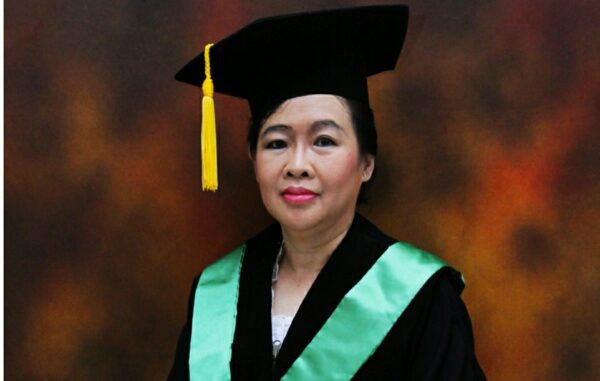
JAKARTA, KalderaNews.com – During the opening of the Leiden-Delft-Erasmus BRIN Academy on 31 October, the Bosscha Medal was awarded to Prof. Taniawati Supali, Head of Helmintology Division Department of Parasitology at the University of Indonesia. Taniawati received the medal for her excellent contribution to science and her working method, which is characterized by cooperation, knowledge sharing and a great social commitment.
The prize was awarded at the start of the LDE-BRIN Academy, which will take place this year from 31 October to 4 November in Serpong, South-Tangerang, near Jakarta.
The Leiden-Delft-Erasmus Universities alliance honors scientists and scholars who have made an outstanding contribution to the international cooperation in research and education between the Netherlands and the Global South, by awarding them the Bosscha medal.
RELATED TOPICS:
- Robbert Dijkgraaf dan Annetje Ottow Resmikan Front Office KITLV-Jakarta dan Kantor Universitas Leiden di Indonesia
- Fathimah Sigit Raih Gelar PhD dari Leiden Berkat Penelitian Obesitas dan Sindrom Metabolik di Indonesia
- Anak Kelas IX Sekarang Mudah Kuliah ke Belanda Lewat Beasiswa Leiden University
The medal was originally established to commemorate Karel Bosscha (1865-1928), a Dutch engineer which a degree from TU Delft who made an outstanding contribution to the development of science and education in Indonesia. During his life on Java, he developed the Malabar Tea Plantation south of Bandung, not only economically but also socially.
Many of the initiatives of Bosscha had an impact in West Java and even beyond. Most important were his contributions to the founding Institut Teknologi Bandung, the Bandung’s Cancer Center, the Gedung Merdeka and the Lembang Observatory (now Bosscha Observatory), to better understand the wider environment we are all living in.
Prof. Taniawati is an authority in the field of parasitology and immunoepidemiology. Her specialty is to investigate the relationship between parasitic infections and the immune system in inhabitants of rural areas. Because of the differences in defenses – compared to residents of urban areas – this group is more vulnerable to new infectious diseases.
In addition to the great importance and high scientific level of her research, Ibu Taniawati working method also impressed the jury, which consists of Prof.dr. Marleen Dekker, Leiden University, prof.dr.ir. Merle de Kreuk, TU Delft and prof.dr. Jurian Edelenbos, Erasmus University Rotterdam. By involving young researchers in her research, Ibu Taniawati makes knowledge sharing a central element in her work. She also involves the research population itself and ensures visibility of these groups. This approach is both merciful and progressive and empowers the population.
Prof.dr. Wim van den Doel, Dean of Leiden-Delft-Erasmus Universities: “Prof. Taniawati Supali’s vision extends beyond her own field. It also stands for the one health principle, by establishing the relationship between economic growth, changes in the environment and the patterns in infectious diseases associated with it. In addition, the fact that prof. Taniawati makes forgotten groups, with unknown diseases, visible and continuously tries to improve their living conditions, makes her a worthy recipient of this medal”.
Ibu Taniawati has 81 internationally recognized scientific publications to her name and has received multiple awards over the years for her scientific work, including from the Gates Foundation. She is a member of the Indonesian Task Force for Lymphatic Filariasis Program, affiliated with the World Health Organisation. The award of the Bosscha medal is also related to her collaboration in an international context and with Dutch researchers in particular.
* Jika merasa artikel ini bermanfaat, silakan dishare pada saudara, sahabat dan teman-temanmu

Leave a Reply