

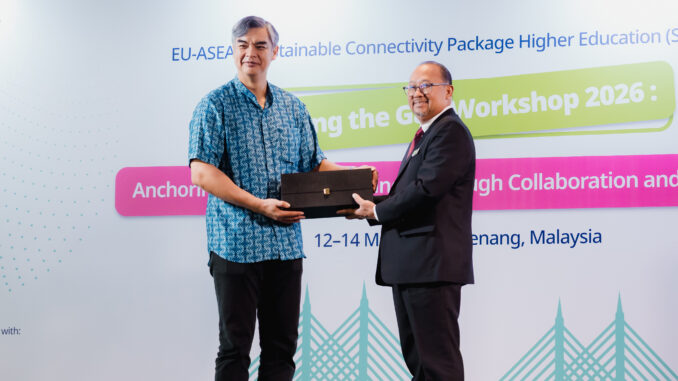
EU and ASEAN strengthen TVET cooperation in Penang to enhance workforce readiness and industry-education alignment.
PENANG, KalderaNews.com – In a significant move to future-proof the regional economy, the Association of Southeast Asian Nations (ASEAN) and the European Union (EU) have convened in Penang for the “Closing the Gap Workshop 2026.”
Running from 12–14 May, the summit focuses on bridging the divide between classroom education and industrial demand through enhanced Technical and Vocational Education and Training (TVET).
RELATED TOPICS:
- Bridging Skills Gaps: ASEAN Stakeholders Unite at Closing the Gap Workshop 2024 in Bangkok
- Celebration of Europe Day 2026 in Indonesia
- BizConnect ToT: EU and ASEAN Strengthen Education Ties
The workshop, hosted by Malaysia’s Ministry of Higher Education and the EU-ASEAN SCOPE-HE programme, serves as a critical platform for government officials, educators, and private sector leaders to design a more resilient workforce.
A Strategy for Sustainable Connectivity
Sujiro Seam, EU Ambassador to ASEAN, underscored that high-quality TVET is the backbone of the EU’s Global Gateway strategy.
“The success of investments in green energy, digital connectivity, and health depends on a skilled local workforce,” Ambassador Seam stated. “This workshop is a concrete step in turning our 2023–2027 Plan of Action into quality jobs and lasting benefits for both regions.”
Representing the host nation, Dr. Zamzam bin Mohd Walid of Malaysia’s Department of Polytechnic and Community College Education (DPCCE) highlighted a shift in educational philosophy. Under the Malaysia Higher Education Blueprint 2026–2035, the country is moving toward a “flexible and industry-connected” ecosystem.
“The future of education must extend beyond classrooms,” Dr. Zamzam noted, emphasizing that lifelong learning and critical thinking are now as vital as technical competencies.
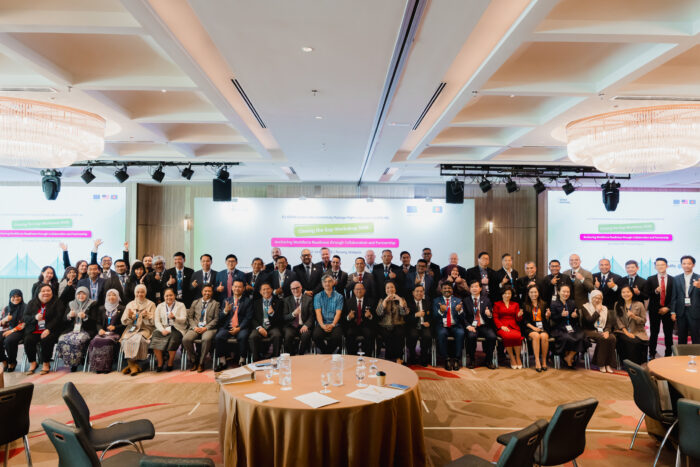
The workshop features several key highlights designed to bridge the gap between education and employment, starting with an industry immersion through a site visit to Robert Bosch (M) Sdn Bhd, where participants can witness successful industry-education collaboration in action.
The agenda also maintains a strong green and digital focus, centering discussions on navigating the “twin transitions” to ensure the regional workforce is prepared for an increasingly decarbonized and digitized economy.
Ultimately, these efforts serve a long-term vision, as the findings and best practices gathered in Penang will contribute to a comprehensive regional roadmap set to be finalized in 2027, providing a strategic framework for future ASEAN-EU cooperation.
Scaling Success Across ASEAN
This 2026 gathering builds on the momentum of previous workshops in Bangkok (2024) and Phnom Penh (2025). By shifting from identifying gaps to showcasing scalable partnership models, the initiative aligns with the ASEAN TVET Council Work Plan 2021–2030.
Dr. Rangsan Thepmondhri, speaking for the ASEAN TVET Council, called for a “shared commitment” to innovation. “By working closely across sectors, we can ensure that skills development systems remain responsive to the future of work,” he concluded.
As the workshop concludes on May 14, the documented recommendations are expected to provide a blueprint for governments and private sectors to co-create a workforce that is not just employable, but essential to the global economy.
Check out other KalderaNews.com news and articles on Google News
*If you found this article helpful, please share it with your family, friends, and colleagues. Interested in collaborating with KalderaNews.com? Please contact us via WhatsApp (0812 8027 7190) or email: kalderanews@gmail.com.



Leave a Reply